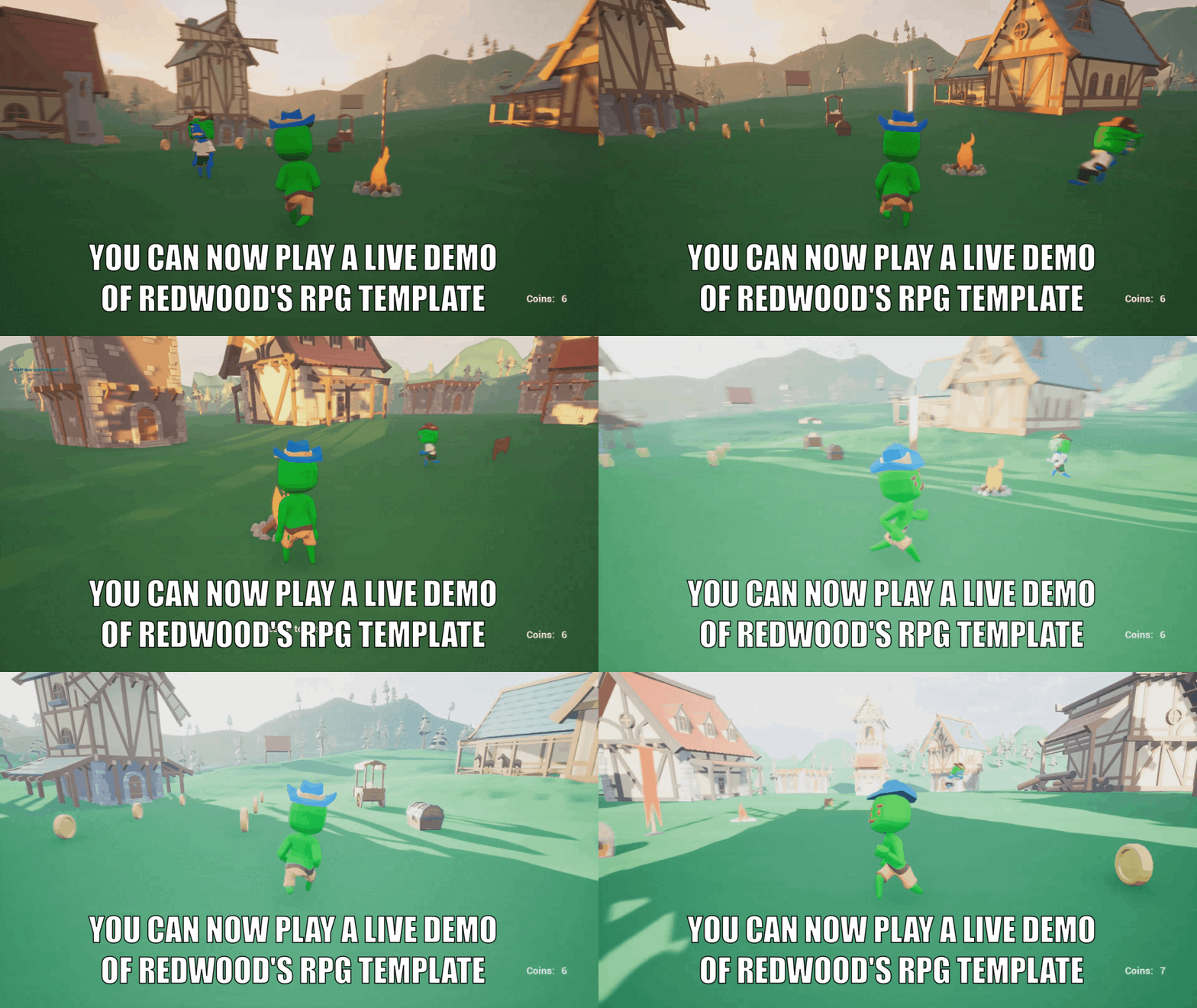
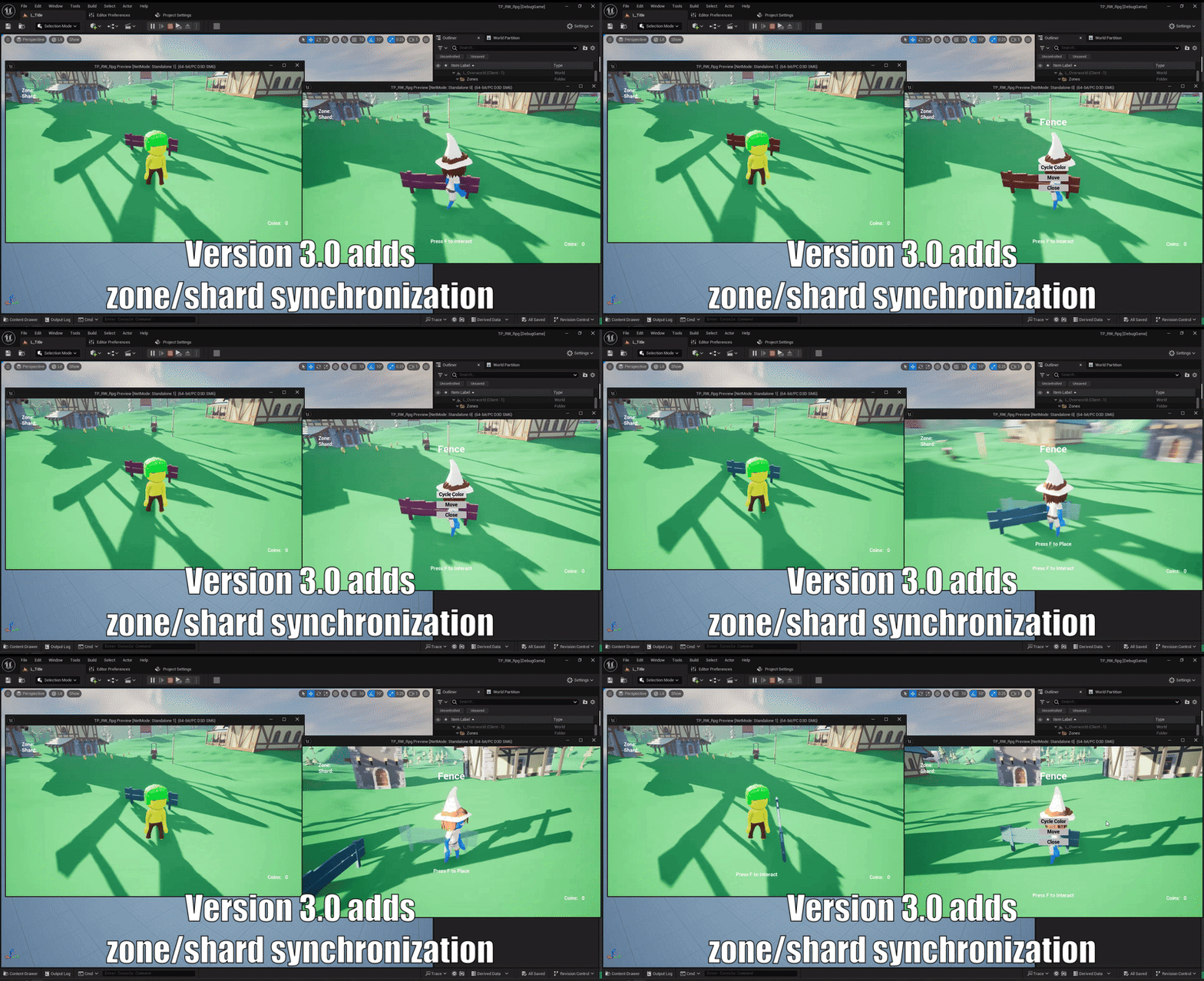
Version 3.0.0 Released

New Features
- We now have a cross-server synchronization system with the use of Sync Items (formally known as Persistent Items; you can still persist Sync Items)
- We upgraded our database ORM Prisma to add support for
cuid2IDs, and changed the defaults to usecuid2for ID generation which brings more secure IDs (though we weren't using them in an unsecure way before) - We've released a public mirror of the documentation so if something catastrophic happens that would result in this website going down, you'll still have access to the full documentation
- We've enabled Standard Licenses to package the Match Function when using Open Match
- We made the process for customizing the Match Function more modular so you create a new class instead of modify the one provided in the source (which would cause merge conflicts)
- We changed the example of the World Data in the RPG Template
- Standard Licenses can now use the Dev Initiator on macOS and Linux
Persistence for Ephemeral Game Servers
I wrote this post as a guest article for Hathora, and I've released it here too as a mirror. Hathora is Redwood's official on-demand game server provider, which can greatly simplify your infrastructure and DevOps.
Without persistent data, online games would only have usernames and maybe avatars. Worlds wouldn't be able to reload after a game or OS update. Whether you're using Hathora for ephemeral matches or persistent worlds, you usually need persistent data to at least keep track of player progression and the player's appearance (but likely much more).
Since Hathora's servers are purely ephemeral [for good reason], we need to add additional components to get persistent data:
- Configuring the servers during creation to give them state
- An external place to store the data
- Methods to retrieve the data
In this post, we'll talk about the different types of persistence and how best to integrate them with Hathora's ephemeral game servers.
Version 2.2.1 Released
This release only has changes in the Backend; the UE plugins and game templates were not changed other than a bumped version number.
This release fixes an issue with the yarn dev command and attempts to fix issues with admin accounts when only using Steam auth provider.
See the GitHub release notes or click Read More below for details.
Version 2.2.0 Released
There were several changes in this release, including support for UE 5.5.
See the GitHub release notes or click Read More below for details.
Version 2.1.1 Released
This release only has changes in the Backend; the UE plugins and game templates were not changed other than a bumped version number.
This release only has changes in the Backend that fixes running yarn install.
See the GitHub release notes.
Version 2.1.0 Released
There were several changes in this release, including improvements to the Unreal plugin, the Kubernetes deployments, and the backend.
See the GitHub release notes or click Read More below for details.
Version 2.0.1 Released
The backend didn't change except for the version number; we've updated the zip regardless.
Bug fixes
This release fixes compiler errors caused by missing includes.
See the GitHub release notes.
Version 2.0.0 Released
The backend didn't change except for the version number; we've updated the zip regardless.
ARedwoodCharacter has been replaced with URedwoodCharacterComponent
This breaking change changes how player character data is set up. Long story short, to support pawns that inherit from APawn instead of ACharacter, the data persistence happens in an Actor Component instead of an Actor. This supports using Redwood with the UE Mover plugin, the marketplace GMCv2 plugin, and other scenarios that don't use UCharacterMovementComponent.
See the GitHub release notes or click Read More below.
Version 1.0.0 Released
Redwood is now out of Early Access with the release of version 1.0.0!
This release includes:
🏹 RPG template project
🗺️ Zones, shards, portals, and basic character data
🎒 Inventory, interactables, and merchants
🏰 Instanced dungeons
See the GitHub release notes or click Read More below.